Robot Vision: Revolutionizing Industrial Automation
Introduction to Robot Vision: Seeing the World Through Artificial Eyes
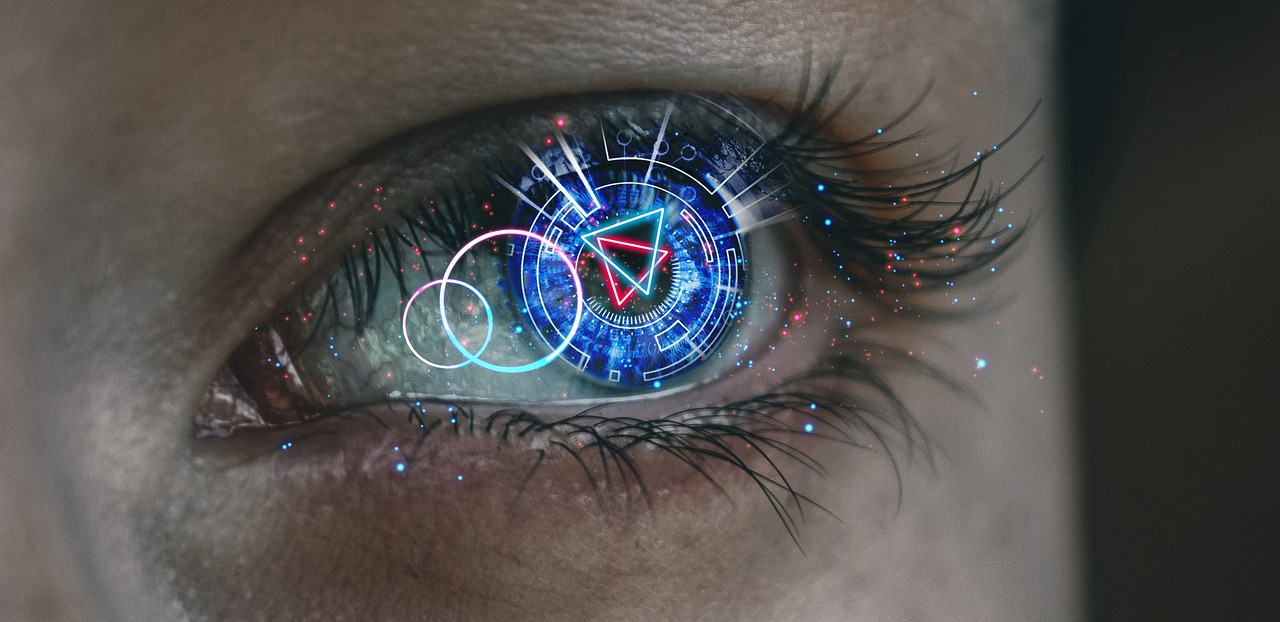
Robot vision, a rapidly evolving field within artificial intelligence (AI) and robotics, empowers robots to “see” and interpret the world around them. It goes far beyond simple object detection, enabling robots to understand context, identify subtle variations, and adapt to dynamic environments. This sophisticated technology is playing a pivotal role in transforming industrial automation, driving efficiency, precision, and flexibility across diverse sectors. Instead of relying on pre-programmed instructions for every scenario, robot vision allows robots to make real-time decisions based on visual data, opening up new possibilities for complex and nuanced tasks.
The Core Components of a Robot Vision System
A comprehensive robot vision system comprises several key components working in concert:
- Image Acquisition: This initial stage involves capturing visual data. Commonly, cameras are used – ranging from standard RGB cameras to specialized high-resolution cameras, 3D cameras (structured light, stereo vision), and thermal cameras. The choice of camera depends on the application’s specific needs, including resolution requirements, lighting conditions, and the type of objects being inspected. High-speed cameras are employed for applications demanding rapid object identification and tracking. Depth cameras enable 3D perception, invaluable for robotic grasping and navigation.
- Image Pre-processing: Raw image data often requires pre-processing to enhance its quality and make it suitable for subsequent analysis. This involves techniques like noise reduction (using filters like Gaussian blur or median filters), contrast adjustment (histogram equalization), and geometric correction (correcting for lens distortion). Region of Interest (ROI) extraction focuses processing on specific areas within the image, minimizing computational load.
- Feature Extraction: This crucial step identifies distinctive features within the image that can be used to represent objects or parts of objects. Features can be categorized as:
- Edge Detection: Identifies boundaries between objects and regions. Algorithms like Canny edge detection are widely used.
- Corner Detection: Locates points where edges meet, offering strong points for object recognition. Harris corner detection is a popular algorithm.
- Texture Analysis: Examines patterns and variations in image intensity to characterize surface properties. Techniques include Local Binary Patterns (LBP) and Gray-Level Co-occurrence Matrix (GLCM).
- Blob Detection: Locates connected regions of pixels, often used for identifying distinct objects.
- Object Recognition & Classification: This is the core of the vision system, where extracted features are compared against a database of known objects. Machine learning algorithms, particularly deep learning techniques, are predominantly utilized for robust and accurate object recognition.
- Traditional Machine Learning: Algorithms like Support Vector Machines (SVM), Random Forests, and k-Nearest Neighbors (k-NN) were historically employed based on hand-engineered features.
- Deep Learning: Convolutional Neural Networks (CNNs) have revolutionized object recognition. CNNs automatically learn hierarchical features from raw image data, eliminating the need for manual feature engineering. Architectures like AlexNet, VGGNet, ResNet, and YOLO (You Only Look Once) are commonly used, each with its strengths and weaknesses.
- Decision Making & Control: The output of the object recognition & classification module informs the robot’s actions. This might involve adjusting a robot arm’s position, triggering a specific operation (e.g., picking and placing an object), or initiating a quality control process. This stage often integrates with the robot’s existing control system, enabling seamless and coordinated operation.
Types of Robot Vision Applications in Industrial Automation
Robot vision is finding applications across a vast range of industrial domains:
1. Pick and Place Operations: One of the most prevalent applications. Robot vision enables robots to identify, locate, and grasp objects with high precision. Advanced systems can handle variations in object orientation, size, and position, improving efficiency and reducing errors. Deep learning models trained on large datasets of objects significantly enhance pick and place accuracy. This is crucial in warehousing, manufacturing, and logistics.
2. Assembly & Component Placement: Robot vision ensures accurate component placement during assembly processes. It can verify component presence, identify proper orientation, and detect defects before assembly begins. This is instrumental in electronics manufacturing, automotive assembly, and appliance production, reducing rework and scrap rates. For instance, ensuring that screws are inserted at the correct angle and depth.
3. Quality Inspection & Defect Detection: Robot vision plays a critical role in automated quality control. It can inspect products for blemishes, scratches, cracks, misalignments, and other defects that are difficult or time-consuming to detect manually. Hyperspectral imaging and thermal cameras are used for detecting subtle defects invisible to the human eye. AI algorithms can be trained to identify complex defect patterns, leading to improved product quality and reduced warranty claims. Applications span across industries like automotive, food processing, and pharmaceuticals.
4. Dimensional Measurement: Robots equipped with vision systems can accurately measure dimensions of parts and products. This is vital for ensuring conformance to specifications and identifying variations. Laser triangulation and structured light techniques are commonly used for accurate 3D measurements. This is particularly useful in aerospace, medical device manufacturing, and precision engineering.
5. Surface Inspection: Robot vision systems can examine surfaces for imperfections, such as scratches, dents, and discoloration. This is particularly important in industries such as automotive, aerospace, and metal fabrication. This often involves specialized lighting techniques and algorithms for detecting subtle surface variations.
6. Guidance & Navigation: In collaborative robots (cobots) operating alongside humans, vision systems provide guidance and navigation capabilities. They enable the robot to avoid obstacles, follow designated paths, and adjust its movements based on the human’s actions, ensuring safe and efficient collaboration.
Advanced Techniques Driving Robot Vision Innovation

Several emerging techniques are pushing the boundaries of robot vision performance:
1. Deep Learning Advancements: Ongoing research and development in deep learning are constantly improving the accuracy, robustness, and efficiency of robot vision systems.
- Transformers in Vision: Vision Transformers (ViT) are gaining traction, rivaling CNNs in performance.
- Self-Supervised Learning: Reducing the reliance on labeled data through self-supervised learning techniques, allowing robots to learn from unlabeled image data.
- Federated Learning: Training models across multiple robots without sharing sensitive data.
2. 3D Vision Technologies: 3D cameras and depth sensors are enabling robots to perceive the environment in three dimensions, enhancing their ability to grasp objects, navigate complex scenes, and interact safely with humans.
- RGB-D Cameras: Combining RGB and depth information for more comprehensive scene understanding.
- LiDAR (Light Detection and Ranging): Using laser pulses to create detailed 3D maps of the environment, particularly useful in autonomous navigation.
- Stereo Vision: Employing two or more cameras to calculate depth based on disparity.
3. Event Cameras: Event cameras capture changes in brightness asynchronously, offering advantages over traditional frame-based cameras in terms of speed, low latency, and high dynamic range. They are particularly well-suited for fast-moving objects and challenging lighting conditions.
4. Explainable AI (XAI): As robot vision systems become more complex, understanding why they make certain decisions is increasingly important. XAI techniques are being developed to provide insights into the reasoning behind AI algorithms, increasing trust and facilitating debugging.
5. Edge Computing: Processing image data directly on the robot or a nearby edge device reduces latency, bandwidth requirements, and reliance on cloud connectivity. This is crucial for real-time applications and autonomous operation.
6. Generative AI: Generative Adversarial Networks (GANs) can be used for data augmentation, creating synthetic training data to improve the performance of robot vision systems, especially when real-world data is limited. GANs can also assist in simulating realistic scenarios for robot training.
Challenges and Future Trends in Robot Vision
Despite significant advancements, robot vision still faces challenges:
- Adverse Lighting Conditions: Variations in lighting (shadows, glare, low light) can significantly impact vision system performance. Robust algorithms are needed to handle these variations.
- Occlusion: When objects are partially hidden, it becomes difficult to recognize and track them.
- Dynamic Environments: Dealing with constantly changing scenes and moving objects presents a significant challenge.
- Data Requirements: Deep learning models often require vast amounts of labeled data for training, which can be expensive and time-consuming to acquire.
- Computational Cost: Complex vision algorithms can be computationally intensive, requiring powerful hardware.
Future trends in robot vision include:
- Increased Autonomy: Robots with advanced vision systems will be able to perform tasks with minimal human intervention.
- Human-Robot Collaboration (Cobots): Vision will play a crucial role in enabling safe and intuitive collaboration between humans and robots.
- Edge-Based AI: Increasing deployment of AI algorithms on edge devices for real-time processing and reduced latency.
- AI-Powered Root Cause Analysis: Leveraging AI to analyze vision data to identify the root causes of quality defects and optimize processes.
- Multimodal Perception: Combining vision with other sensors (e.g., force sensors, tactile sensors) to create a more comprehensive understanding of the environment.
- Development of more robust and interpretable AI models.
Industry-Specific Examples of Robot Vision Impact
Automotive Industry: Robot vision is utilized for quality inspection of painted surfaces, weld verification,