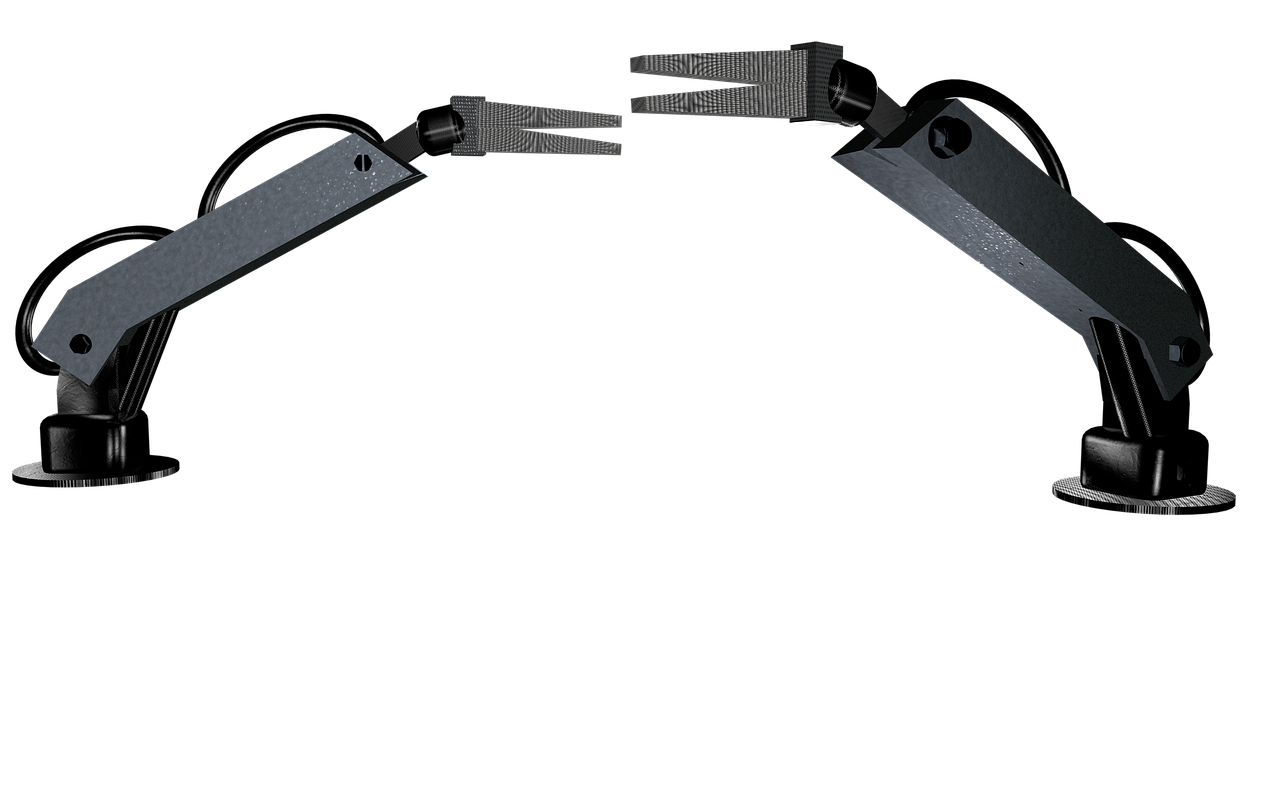

Custom Vision Robotics: Building Intelligent Machines
Custom Vision Robotics (CVR) is a pioneering force in the rapidly evolving field of robotics, specializing in the design, development, and deployment of highly adaptable and intelligent robotic systems. More than just assembling hardware, CVR focuses on crafting sophisticated software and AI algorithms that empower robots to perceive, understand, and interact with the world in a nuanced and efficient manner. This article delves into the core principles underpinning CVR’s approach, exploring its key technologies, applications across diverse industries, challenges encountered, and future trajectory, all while highlighting its commitment to innovation and real-world impact.
The Core Philosophy: Dexterity, Perception, and Autonomy
At the heart of CVR’s philosophy lies a holistic approach to robotic development, prioritizing three critical pillars: dexterity, perception, and autonomy. Dexterity refers to the robot’s physical capabilities – its manipulation, locomotion, and interaction with objects. Perception encompasses the robot’s ability to gather and interpret sensory data from its environment encompassing visual, auditory, tactile, and other modalities. Autonomy, the ultimate goal, is the robot’s capacity to operate independently, making decisions and adapting to dynamic situations without constant human intervention. CVR views these three elements as inextricably linked—enhanced perception fuels better dexterity, and greater autonomy relies on both.
Perception Systems: Seeing, Hearing, and Understanding
Robust perception is the foundation of intelligent robotics. CVR employs a multi-faceted approach to perception, integrating a suite of advanced sensors and sophisticated algorithms.
Computer Vision: CVR’s computer vision systems are built upon deep learning models, primarily convolutional neural networks (CNNs), trained on extensive datasets to enable object recognition, pose estimation, and scene understanding. They utilize various approaches including:
- Object Detection: Identifying and locating specific objects within an image or video stream. This goes beyond simple classification, providing bounding boxes and confidence scores. CVR’s models are optimized for speed and accuracy, crucial for real-time applications. They’re adept at detecting objects even with occlusion, varying lighting conditions, and complex backgrounds.
- Semantic Segmentation: Classifying each pixel in an image, assigning it to a specific category (e.g., floor, wall, object). This provides a detailed understanding of the scene layout, vital for navigation and manipulation planning. CVR’s semantic segmentation models are specifically tailored to robotic applications, considering the limitations of onboard processing power.
- 3D Vision: Utilizing stereo cameras or depth sensors (like LiDAR and structured light) to create 3D maps of the environment. This allows robots to understand spatial relationships, navigate autonomously in complex environments, and interact with objects in a precise manner. CVR employs advanced sensor fusion techniques to combine data from multiple sources, improving the accuracy and robustness of its 3D perception.
- Visual SLAM (Simultaneous Localization and Mapping): A crucial component for autonomous navigation. Visual SLAM allows the robot to build a map of its environment while simultaneously determining its own location within that map, using only visual input. CVR’s SLAM algorithms are resilient to changes in lighting and texture and are often augmented with inertial measurement units (IMUs) for enhanced accuracy.
Auditory Perception: CVR integrates microphones and employs acoustic signal processing techniques to enable robots to understand and respond to spoken commands, identify sounds (e.g., machinery noises, alarms), and localize sound sources. This involves:
- Speech Recognition: Converting spoken language into text, enabling direct communication with human operators. CVR’s speech recognition systems are trained on domain-specific vocabularies, improving accuracy in noisy environments.
- Sound Event Detection: Identifying specific sounds of interest, such as the sound of a machine malfunctioning, which can trigger automated responses or alerts.
- Acoustic Localization: Determining the direction and distance of a sound source, vital for robots operating in dynamic environments where locating objects by sight may be difficult.
Tactile Perception: CVR incorporates force/torque sensors and tactile sensors on robotic manipulators to provide robots with a sense of touch. This empowers them to:
- Object Grasping: Developing stable and secure grasps on objects, even with varying shapes and textures. Tactile feedback allows the robot to adjust its grip force in real-time to avoid slippage or damage.
- Force Control: Precisely controlling the forces applied during manipulation tasks, preventing damage to objects and ensuring the completion of delicate operations.
- Object Recognition via Touch: Determining the properties of an object – such as its hardness, texture, and shape – by applying controlled pressure and analyzing the resulting tactile data.

Dexterity and Manipulation: The Art of Physical Interaction
CVR’s expertise extends far beyond perception into the realm of physical manipulation. Its robotic manipulators are designed for precision, flexibility, and adaptability. These systems incorporate:
- Advanced Kinematics: Utilizing sophisticated control algorithms to orchestrate the movements of robotic joints, ensuring smooth and efficient motions. CVR uses both traditional kinematic approaches and learning-based control methods to achieve optimal performance.
- Force/Torque Control: Integrating force/torque sensors into the manipulators to allow for precise control of interaction forces. This is critical for tasks requiring delicate manipulation or assembly.
- End-Effector Design: Developing a wide range of end-effectors (tools attached to the robot’s arm) tailored to specific tasks. These include grippers, vacuum cups, screwdrivers, and specialized tools for assembly, inspection, and material handling. CVR uses 3D printing and rapid prototyping to create custom end-effectors optimized for each application.
- Motion Planning: CVR utilizes advanced motion planning algorithms (like RRT and PRM) to plan collision-free trajectories for the robot’s arm, enabling it to navigate complex workspaces and perform intricate manipulation tasks. Its planning algorithms account for the robot’s physical limitations, environmental constraints, and task requirements.
- Learning-Based Manipulation: Employing reinforcement learning (RL) to train robots to perform complex manipulation tasks through trial and error. This allows robots to adapt to new environments and improve their performance over time without requiring extensive reprogramming.
Autonomy and Decision-Making: Independent Operation
CVR emphasizes the development of autonomous capabilities, enabling robots to operate with minimal human intervention. This involves incorporating several key components:
- Behavioral Planning: Defining the robot’s actions and goals based on its perception of the environment and its mission objectives. This uses hierarchical planning frameworks, allowing for both high-level strategic planning and low-level tactical execution.
- Decision-Making: Integrating AI algorithms, such as decision trees and Bayesian networks, to enable robots to make informed decisions based on incomplete or uncertain information. This allows the robot to adapt to unexpected situations and achieve its goals even in dynamic environments.
- Adaptive Control: Using feedback control systems to adjust the robot’s behavior in real-time based on its performance and the changing environment. This ensures that the robot maintains stability and achieves its goals even in the presence of disturbances.
- Human-Robot Interaction (HRI): Developing intuitive interfaces for humans to interact with robots, allowing them to monitor their progress, provide guidance, and intervene when necessary. This includes voice control, gesture recognition, and visual displays.
- Path Planning & Navigation: CVR deploys state-of-the-art path planning algorithms in conjunction with robust obstacle avoidance strategies to allow its robots to navigate autonomously in complex environments.
Applications Across Industries: Transforming Real-World Operations
CVR’s robotic systems are finding widespread adoption across a diverse range of industries, driving significant improvements in efficiency, productivity, and safety. Some key application areas include:
- Manufacturing: Automating assembly lines, performing quality control inspections, and handling materials. Robots enhance precision, speed, and consistency in manufacturing processes. Specifically, CVR solutions are utilized in automotive manufacturing (e.g., welding, painting), electronics manufacturing (e.g., component placement, soldering), and pharmaceutical manufacturing (e.g., sterile handling, dispensing).
- Logistics & Warehousing: Automating warehouse operations such as picking, packing, and sorting of goods. CVR’s robots enable faster order fulfillment, reduce labor costs, and improve inventory accuracy. Self-driving forklifts and autonomous guided vehicles (AGVs) are key components of these systems.
- Healthcare: Assisting surgeons in complex operations, automating medication dispensing, and providing support to elderly or disabled individuals. CVR solutions offer improved precision, reduced fatigue for medical staff, and enhanced patient care. Surgical robots utilizing advanced vision and dexterity capabilities are a prominent application.
- Agriculture: Automating tasks such as planting, harvesting, and crop monitoring. CVR’s robots help improve crop yields, reduce labor costs, and minimize the environmental impact of agriculture. Robotic systems equipped with computer vision can identify diseased plants early on, enabling targeted interventions.
- Security & Inspection: Performing inspections in hazardous environments (e.g., nuclear power plants, oil refineries) and providing security surveillance. CVR’s robots can navigate difficult terrains and access confined spaces, reducing risks to human personnel.
Challenges and Considerations: Navigating the Road Ahead
Despite significant advancements, the field of robotics presents ongoing challenges that CVR is actively addressing:
- Cost: The development and deployment of sophisticated robotic systems can be expensive. CVR is constantly working on optimizing its designs and leveraging cost-effective components to make its solutions more accessible.
- Robustness: