
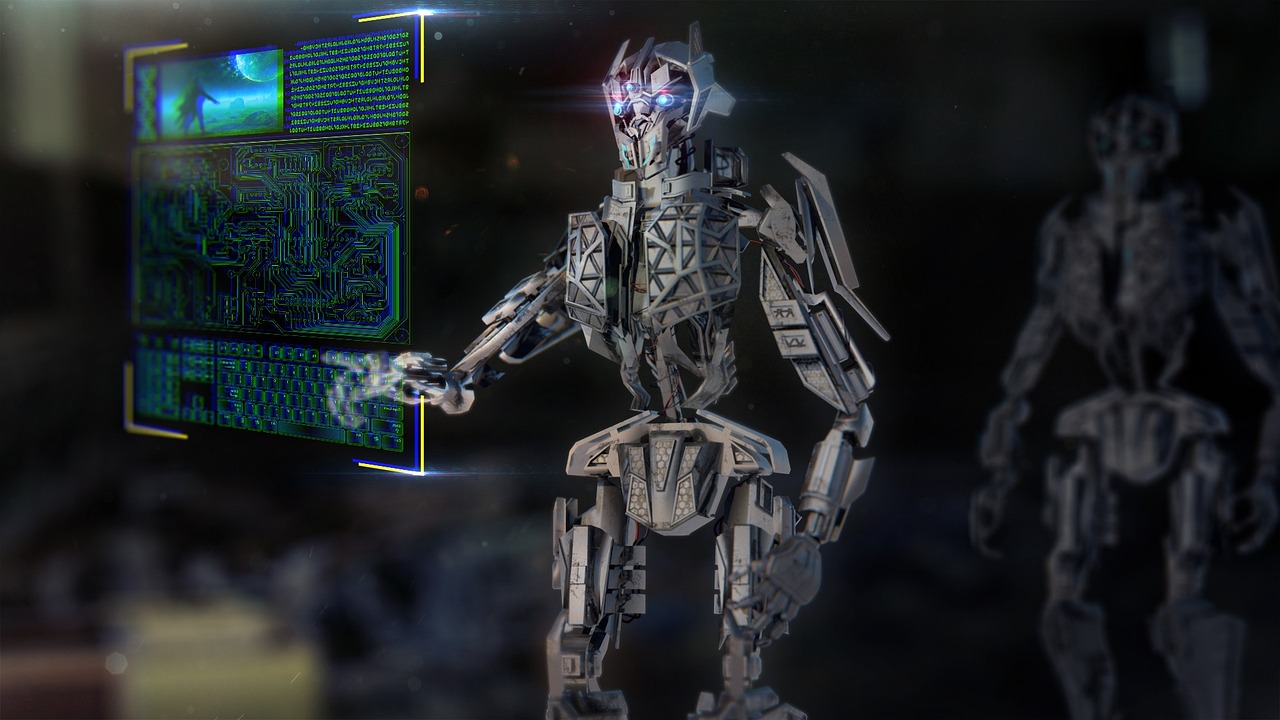
Vision Robotics in Manufacturing: A Comprehensive Integration Guide
Keywords: Vision Robotics, Manufacturing Automation, Industrial Vision Systems, AI Vision, Machine Vision, Quality Control, Defect Detection, Robot Integration, Computer Vision, Predictive Maintenance, Supply Chain Optimization, Smart Manufacturing, Digital Transformation, Edge Computing, Deep Learning, Convolutional Neural Networks, Industrial IoT, Automated Inspection, Visual Metrology, Parts Identification, Assembly Verification, Robotic Guidance, Manufacturing Efficiency, Process Optimization.
Understanding the Landscape: Why Vision Robotics is Transforming Manufacturing
The modern manufacturing environment is under immense pressure to achieve higher levels of efficiency, quality, and agility. Global competition, evolving customer demands, and increasingly complex product designs are driving a paradigm shift toward smart manufacturing – the integration of digital technologies into every aspect of the manufacturing process. At the heart of this transformation lies Vision Robotics, a rapidly evolving field that leverages computer vision, artificial intelligence (AI), and advanced robotics to automate and optimize a myriad of manufacturing tasks.
Vision Robotics isn’t just about replacing human inspectors; it’s about augmenting human capabilities, enabling predictive maintenance, and creating entirely new possibilities for process control. It encompasses a wide range of technologies, including sophisticated cameras, powerful image processing algorithms, and intelligent software platforms, all working in concert to extract meaningful insights from visual data. This capability is revolutionizing industries ranging from automotive and electronics to pharmaceuticals and food & beverage.
The core power of Vision Robotics stems from its ability to perform tasks that are difficult or impossible for humans – identifying minute defects, measuring dimensions with exceptional precision, and navigating complex environments. This heightened accuracy and speed translate into significant benefits: reduced waste, improved product quality, enhanced safety, and ultimately, increased profitability.
Core Components of a Vision Robotics System
A comprehensive Vision Robotics system is built around several key components, each playing a crucial role in the overall functionality:
1. Hardware: The Eyes and Ears of the System
- Industrial Cameras: These are specialized cameras designed for the harsh conditions of industrial environments. They come in various types, including:
- Monochrome Cameras: Offer high resolution and are ideal for detailed inspection tasks.
- Color Cameras: Capture color information for identifying defects based on color variations.
- 3D Cameras: Provide depth information, enabling precise measurements and 3D defect detection. Examples include structured light cameras and stereo vision systems.
- High-Speed Cameras: Capture rapidly moving objects or processes, essential for quality control in high-speed production lines.
- Thermal Cameras: Detect temperature variations, useful for identifying overheating components or insulation defects.
- Line Scan Cameras: Suitable for inspecting continuous web materials, such as textiles or flexible circuit boards.
- Illumination Systems: Proper lighting is critical for high-quality image acquisition. Common types include:
- Diffuse Lighting: Provides even illumination, minimizing shadows and glare.
- Backlighting: Highlights edge defects or irregularities.
- Structured Lighting: Projects a known pattern of light onto the object to create a 3D representation for accurate measurements.
- Polarized Lighting: Reduces glare from reflective surfaces.
- Backlight and Frontlight combinations: Provides high contrast images, crucial for intricate details.
- Optics: Lenses play a vital role in image quality. Considerations include focal length, aperture, and distortion correction to ensure optimal image sharpness and field of view.
2. Software: The Brains of the Operation
- Image Acquisition and Pre-processing: This involves capturing images from the cameras and applying various algorithms to enhance image quality, such as noise reduction, contrast adjustment, and geometric correction.
- Feature Extraction: Algorithms extract relevant features from the images, such as edges, corners, textures, and shapes. These features are used for defect detection, object recognition, and measurement.
- Object Recognition/Classification: Machine learning algorithms are employed to identify and classify objects within the images. This can involve recognizing specific parts, identifying product types, or classifying defects based on their characteristics.
- Defect Detection and Analysis: This is a core function of Vision Robotics systems. Algorithms are trained to identify and locate defects, such as scratches, cracks, stains, and missing components. Sophisticated algorithms can even quantify the severity of the defect.
- Measurement and Inspection: Vision systems can precisely measure dimensions, angles, distances, and other geometric parameters. This is used for verifying product conformance to specifications and ensuring dimensional accuracy.
- Robot Integration Software: This enables seamless communication and coordination between the vision system and industrial robots. The vision system provides the robot with the necessary information to perform tasks such as picking, placing, assembly, and grinding.
- AI/Machine Learning Platforms: Modern Vision Robotics systems heavily rely on AI and machine learning. Common techniques include:
- Convolutional Neural Networks (CNNs): Excellent for image classification, object detection, and defect segmentation.
- Deep Learning: Allows the system to learn complex patterns from large datasets of images.
- Reinforcement Learning: Enables the system to learn optimal strategies for tasks such as robotic guidance and assembly.
3. Edge Computing and Connectivity
- Edge Computing: Processing data closer to the source (i.e., on the camera or a nearby embedded system) reduces latency, improves real-time performance, and enhances data security. This is particularly important for applications requiring fast response times.
- Industrial IoT (IIoT): Vision systems are increasingly connected to other manufacturing systems through IIoT platforms, enabling data sharing and integration with enterprise resource planning (ERP), manufacturing execution systems (MES), and other business applications.
- Cloud Connectivity: Enables remote monitoring, data analysis, model training, and software updates. Allows for centralized management and scalability.
Key Applications of Vision Robotics in Manufacturing
The versatility of Vision Robotics has led to its adoption across a wide range of manufacturing processes:
1. Quality Control and Automated Inspection:
This is arguably the most prevalent application. Vision systems can perform comprehensive inspections, identifying defects that would be missed by human inspectors. Applications include:
- Surface Defect Detection: Detecting scratches, dents, cracks, and other surface imperfections on metal, plastic, and other materials.
- Dimensional Inspection: Measuring critical dimensions to ensure conformance to specifications.
- Color and Texture Inspection: Verifying color consistency and texture uniformity.
- Missing Component Detection: Identifying missing components or assembly errors.
- Optical Character Recognition (OCR): Reading barcodes, serial numbers, and other text information.

2. Robot Guidance and Navigation:
Vision systems provide robots with the visual information they need to navigate complex environments and perform tasks accurately. Applications include:
- Pick-and-Place Operations: Robots can use vision to identify and pick up objects from a conveyor belt or storage bin.
- Assembly Verification: Ensuring that parts are assembled correctly.
- Guided Assembly: Robots can use vision to guide workers through complex assembly procedures.
- Autonomous Mobile Robots (AMRs): Vision enables AMRs to navigate warehouses and factories autonomously, delivering parts and materials as needed.
3. Predictive Maintenance:
Vision Robotics can be used to monitor equipment for signs of wear and tear, allowing for proactive maintenance and minimizing downtime. Applications include:
- Visual Inspection of Mechanical Components: Detecting cracks, wear, or other damage in gears, bearings, and other mechanical parts.
- Thermal Imaging for Identifying Overheating Components: Identifying components that are overheating, indicating potential failures.
- Vibration Analysis: Analyzing images of vibrating components to identify anomalies.
4. Supply Chain Optimization:
Vision Robotics can improve supply chain efficiency by automating tasks such as:
- Package Verification: Verifying that packages contain the correct items.
- Label Inspection: Ensuring that labels are correctly applied and legible.
- Inventory Management: Automated counting and scanning of inventory.
- Automated Sorting: Sorting products based on visual characteristics.
5. Process Optimization:
Real-time data from vision systems can be used to optimize manufacturing processes. Applications include:
- Process Monitoring: Tracking key parameters such as production speed, defect rates, and cycle times.
- Root Cause Analysis: Identifying the causes of defects or process variations.
- Adaptive Control: Adjusting process parameters in real-time to optimize performance.
Integrating Vision Robotics into Existing Manufacturing Environments
Successful integration of Vision Robotics requires a carefully planned approach:
1. Needs Assessment:
- Identify the specific pain points and opportunities within the manufacturing process.
- Determine which tasks are suitable for automation using Vision Robotics.
- Define clear performance goals.
2. System Design:
- Select the appropriate hardware and software components.
- Develop a detailed system architecture.
- Consider scalability and future growth.
3. Data Acquisition and Annotation:
- Collect a large dataset of images representing both good and defective products.
- Annotate the data to identify and label defects.
- Ensure data quality and consistency.
4. Algorithm Training and Validation:
- Train machine learning algorithms on the annotated data.
- Validate the algorithms using a separate dataset.
- Fine-tune the algorithms to optimize performance.
5. System Integration and Testing:
- Integrate the vision system with existing manufacturing equipment and systems.
- Conduct thorough testing to ensure functionality and reliability.
- Validate the system’s performance in a production environment.
6. Training and Support:
- Provide training to operators