
Real-Time Object Detection: Applications Across Industries
Keywords: Real-time object detection, AI, computer vision, deep learning, applications, industry, autonomous vehicles, healthcare, retail, manufacturing, security, agriculture, robotics, surveillance, smart cities, video analytics, image recognition, TensorFlow, YOLO, SSD, Faster R-CNN.
1. Introduction to Real-Time Object Detection
Real-time object detection is a subfield of computer vision and artificial intelligence (AI) that focuses on identifying and locating objects within images or video streams with minimal latency. Unlike traditional image classification, which simply predicts the presence of an object in an image, object detection goes a step further by providing bounding boxes around the detected objects, indicating their position and size. The “real-time” aspect is crucial – the system must process the input and provide outputs at a speed sufficient to keep pace with the source of the data, making it suitable for applications requiring immediate responses.
The advent of deep learning, particularly convolutional neural networks (CNNs), has revolutionized object detection, leading to significant advancements in accuracy and speed. Modern real-time object detection systems are typically based on deep neural networks trained on massive datasets of labeled images. These networks learn to extract features from images and use those features to distinguish between different objects.
2. Core Concepts and Technologies
Several key concepts and technologies underpin real-time object detection. These include:
- Convolutional Neural Networks (CNNs): The backbone of most modern object detection systems. CNNs excel at extracting hierarchical features from images, starting with simple features like edges and corners and progressively building up to more complex features that represent entire objects.
- Bounding Boxes: Rectangular regions that enclose detected objects. Bounding boxes are typically defined by their coordinates (x, y, width, and height). Object detection algorithms predict the location and dimensions of these boxes.
- Intersection over Union (IoU): A metric used to evaluate the overlap between a predicted bounding box and a ground truth (actual) bounding box. IoU is calculated as the area of intersection divided by the area of union. It’s a key factor in determining the accuracy of detection.
- Non-Maximum Suppression (NMS): A post-processing technique used to eliminate redundant bounding boxes that overlap significantly. This ensures that only the most confident and accurate detections are retained.
- Anchor Boxes: Predefined bounding boxes of different sizes and aspect ratios used to help the network predict object locations. Anchor boxes provide a starting point for the network to refine its predictions.
- Loss Functions: Mathematical functions that quantify the difference between the predicted outputs and the ground truth. Loss functions guide the training process by indicating how to adjust the network’s parameters to improve its performance. Common loss functions in object detection include localization loss, classification loss, and confidence loss.
Several popular deep learning architectures are specifically designed for real-time object detection:
- You Only Look Once (YOLO): YOLO is a family of real-time object detection algorithms known for its speed and accuracy. It treats object detection as a regression problem, predicting bounding boxes and class probabilities directly from the input image in a single pass through the network. Different versions of YOLO (e.g., YOLOv5, YOLOv7, YOLOv8) continuously improve upon its architecture and performance. YOLOv5, in particular, has gained popularity due to its ease of use and strong results. It employs a single-stage detection approach, minimizing computational overhead.
- Single Shot Detectors (SSD): Similar to YOLO, SSD is a single-stage detector that performs object detection in a single pass. SSD utilizes multiple feature maps at different scales to detect objects of varying sizes. It’s known for its good balance of speed and accuracy. SSD predicts bounding boxes and class scores directly from these feature maps.
- Faster R-CNN: Faster R-CNN is a two-stage detector that first proposes regions of interest (ROIs) in the image and then classifies and refines the bounding boxes for those ROIs. While generally slower than YOLO and SSD, Faster R-CNN often achieves higher accuracy, particularly for small objects. It uses a Region Proposal Network (RPN) to efficiently generate potential object locations.
- EfficientDet: EfficientDet focuses on achieving a good balance between accuracy and efficiency by using a weighted bi-directional feature pyramid network and a compound scaling method. It allows for scaling the model to varying computational budgets while maintaining performance.
3. Applications in the Automotive Industry
Real-time object detection is transforming the automotive industry, enabling the development of advanced driver-assistance systems (ADAS) and autonomous vehicles. Key applications include:

- Pedestrian Detection: Identifying and tracking pedestrians is a critical safety feature. Object detection systems can detect pedestrians in various lighting and weather conditions, alerting the driver or autonomously braking to avoid collisions. Sophisticated algorithms can also predict pedestrian movement.
- Vehicle Detection: Detects other vehicles on the road, allowing the system to maintain a safe following distance, detect lane changes, and navigate traffic. It can differentiate between different vehicle types (cars, trucks, motorcycles).
- Traffic Sign Recognition: Recognizing traffic signs (speed limits, stop signs, yield signs) allows the vehicle to comply with traffic regulations. Object detection systems can identify and interpret traffic signs even when partially obscured or damaged.
- Lane Detection: Identifying lane markings helps the vehicle stay within its lane and avoid drifting. Real-time object detection systems can pinpoint lane boundaries with high accuracy.
- Obstacle Detection: Detects obstacles such as debris, construction barriers, and animals in the vehicle’s path, enabling the vehicle to navigate safely around them.
- Adaptive Cruise Control (ACC): Utilizes object detection to maintain a safe distance from the vehicle ahead, automatically adjusting speed as needed.
- Emergency Braking Systems (AEB): Object detection is crucial for AEB systems, which automatically apply the brakes to avoid or mitigate collisions.
4. Healthcare Applications
Real-time object detection is finding increasing applications in the healthcare industry, assisting medical professionals with various tasks.
- Medical Image Analysis: Detecting and segmenting organs, tumors, and other abnormalities in medical images (X-rays, CT scans, MRIs) can aid in diagnosis and treatment planning. Object detection helps highlight regions of interest for radiologists.
- Surgical Assistance: Object detection can be used to track surgical instruments and guide surgeons during complex procedures, improving precision and minimizing invasiveness. Augmented reality (AR) systems can overlay object detection information onto the surgical field.
- Patient Monitoring: Real-time object detection can monitor patient movements, detect falls, and alert medical staff to emergencies. This is particularly valuable for patients in hospitals and nursing homes. Facial expression analysis can detect pain or distress.
- Drug Discovery: Analyzing microscopy images to identify and quantify cells or particles in drug development is accelerated with object detection.
- Automated Diagnosis: Assisting in the diagnosis of diseases like pneumonia, diabetic retinopathy, and skin cancer by automatically identifying relevant features in medical images.
5. Retail Applications
The retail industry is leveraging real-time object detection to enhance customer experience, optimize operations, and improve security.
- Inventory Management: Monitoring shelves and floors in real-time to track inventory levels, identify out-of-stock items, and optimize stock replenishment. Robots equipped with object detection can automate stocktaking.
- Customer Behavior Analysis: Analyzing customer movement patterns, dwell times, and product interactions to understand shopping behavior and optimize store layout. This data can be used to personalize marketing campaigns and improve the overall shopping experience.
- Loss Prevention: Detecting shoplifting and other suspicious activities by identifying people concealing goods or exhibiting unusual behavior.
- Automated Checkout: Developing cashier-less checkout systems that use object detection to identify items placed in a shopping cart and automatically charge the customer’s account.
- Personalized Recommendations: Analyzing what items a customer is viewing or holding allows for immediate, personalized product recommendations on digital displays or mobile apps.
- Queue Management: Analyzing customer queue lengths and patterns to optimize staffing and improve checkout efficiency.
6. Manufacturing Applications
Real-time object detection is playing a crucial role in modern manufacturing, improving quality control, automating processes, and enhancing worker safety.
- Quality Inspection: Detecting defects in products on the assembly line, reducing waste and improving product quality. Object detection systems can identify scratches, dents, misalignments, and other imperfections.
- Automated Assembly: Guiding robots during assembly processes, enabling them to accurately place components and perform tasks. Object detection helps robots identify the location and orientation of parts.
- Predictive Maintenance: Detecting anomalies in machinery and equipment that may indicate potential failures. This allows for proactive maintenance, preventing costly downtime.
- Workplace Safety: Monitoring worker behavior and detecting unsafe conditions, such as workers not wearing safety equipment or operating machinery improperly.
- Parts Identification: Automated identification of components and parts during manufacturing, streamlining the processes.
- Supply Chain Monitoring: Tracking the movement of goods within the manufacturing facility and ensuring efficient flow.
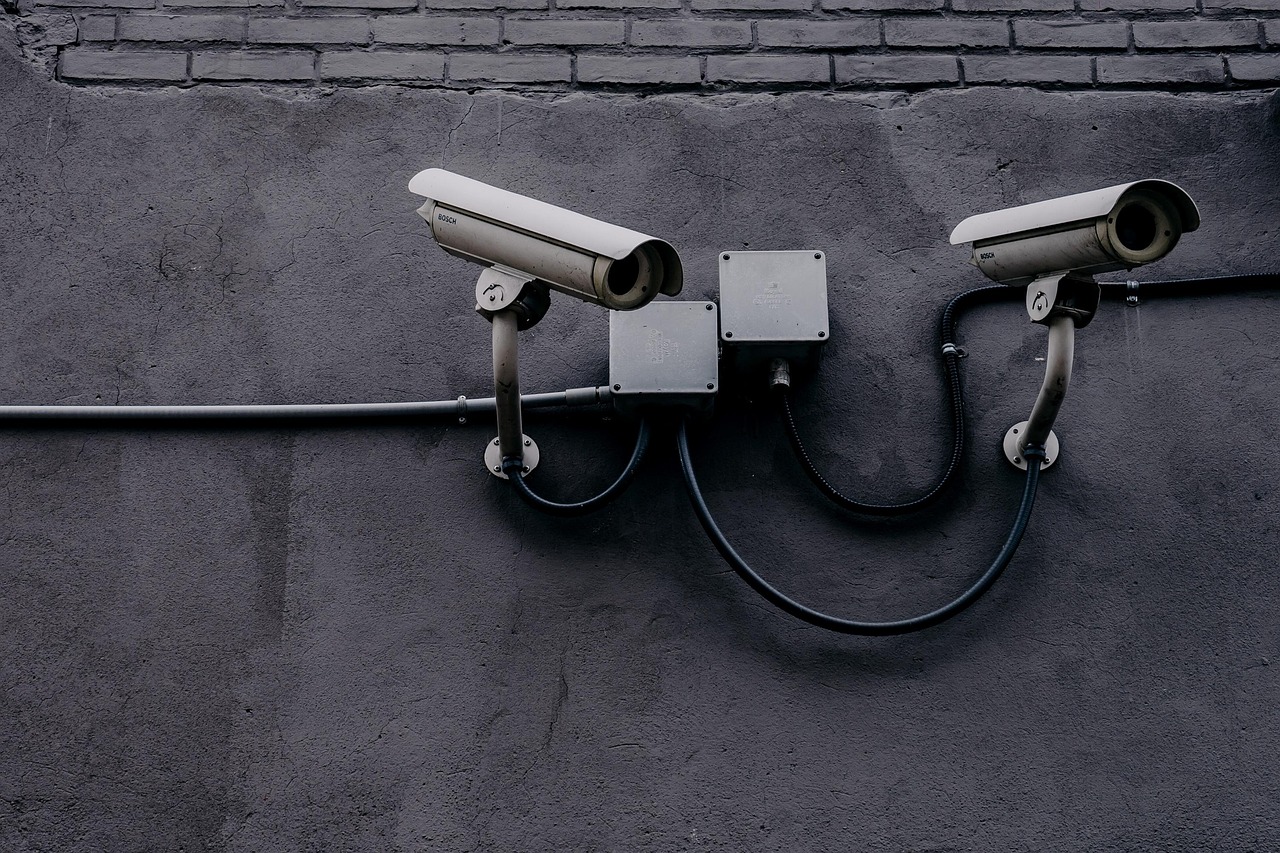
7. Security and Surveillance Applications
Real-time object detection is being widely adopted for security and surveillance purposes, enhancing situational awareness and improving response times.
- Intrusion Detection: Detecting unauthorized individuals or vehicles entering restricted areas.
- Facial Recognition: Identifying known individuals or flagging suspicious faces in